The quarter around the room
The Albaicín before the show
A short history of the Albaicín, Granada's hill quarter: its first settlers, the Zirid citadel, Nasrid streets, the old mosque and the cisterns.
Book dinner and flamenco ↗Quick answer
The Albaicín is the hill quarter of Granada that faces the Alhambra. Its history runs from a small early settlement through an 11th-century Zirid citadel to the Nasrid era, when it kept the medieval street plan that survives today. It is part of Granada's UNESCO heritage area, and Calle Panaderos, where Jardines de Zoraya stands, was its commercial centre in Nasrid times.
The hill and its first settlement
Wikipedia says that between the 8th and 10th centuries a small settlement and fortress called Gharnāṭa stood on this ground, with a mainly Jewish population. The name later became Granada. That is a modest beginning for what is now the city's best-known old quarter, and it explains why the Albaicín's lanes feel more like a village hillside than a planned district. The streets grew up the slope step by step.
The Zirid citadel
At the start of the 11th century the Zirids, a Berber group, dominated the area. According to Wikipedia, they built their citadel and palace, called al-Qaṣaba al-Qadīma, on the hill the Albaicín now occupies. A citadel gave the hill its first fixed centre, and the quarter's later streets formed around it. When you walk up to dinner, you are climbing the same slope that Granada's early rulers chose for their stronghold.
Under the Nasrids
In the Nasrid period, from the 13th to the 15th centuries, the neighbourhood kept its medieval street plan, according to Wikipedia. The same article says Panaderos Street was the quarter's commercial centre then. Jardines de Zoraya stands on Calle Panaderos, so your evening happens on a street that has been a place of trade and meals for many centuries. The lanes around it are narrow because they were laid out for walkers, not carts.
The royal palace moves
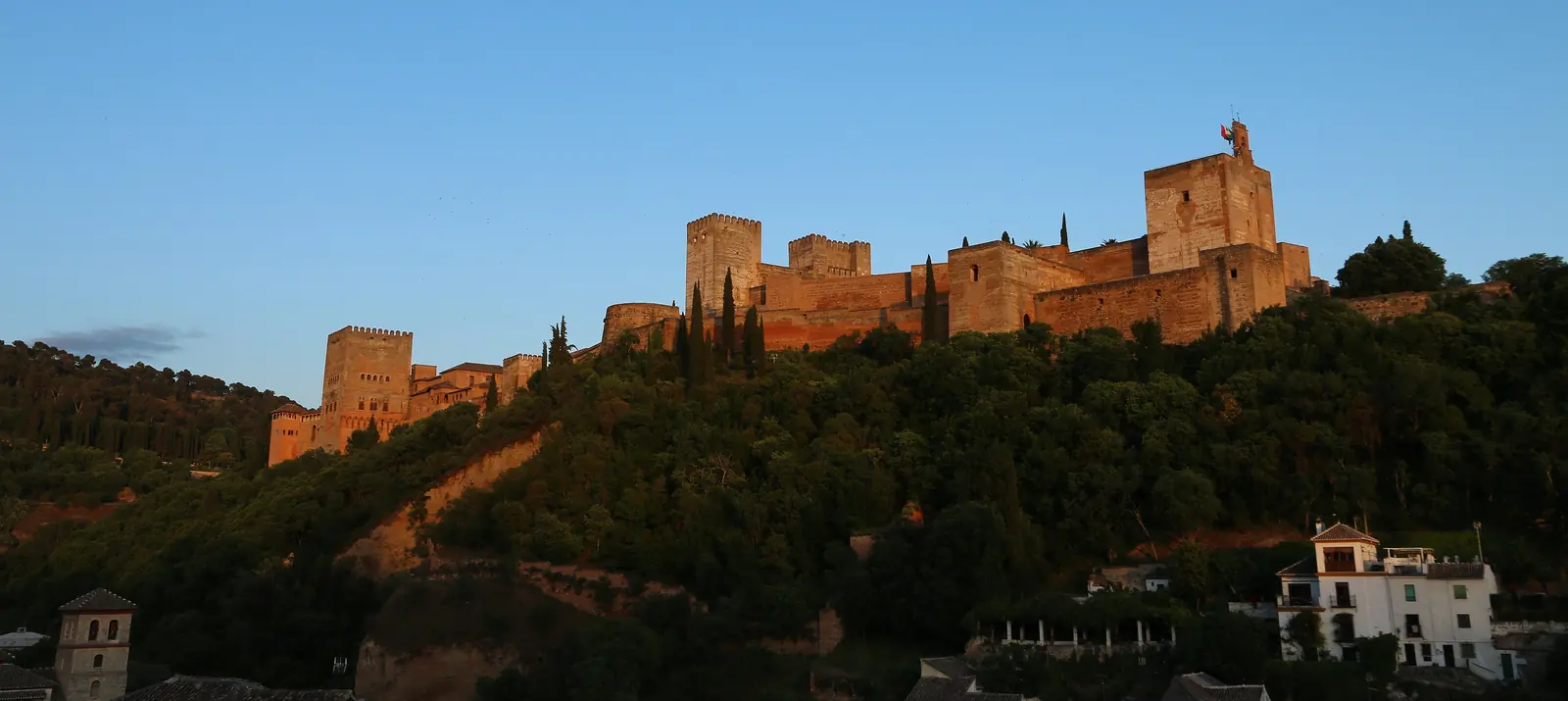
Wikipedia explains that under the Nasrids the royal palace moved from the Albaicín to the Sabika hill, where construction of the Alhambra began. That move is the reason the two hills face each other: one became the royal complex, the other stayed the home of everyday life. It also explains the famous view. From the Albaicín you look straight across at the walls and towers the court once built on the other hill.
The mosque that became a church
Wikipedia says the Albaicín's original mosque was consecrated as a church in 1499 by Cardinal Cisneros and became a parish church in 1501. The venue says its tablao sits behind the old mosque of the Albaicín, which makes this building a useful landmark when you look for the way. It is now the Church of San Salvador, and its presence recalls how the quarter's religious life changed while its streets stayed.
Cisterns and gardens
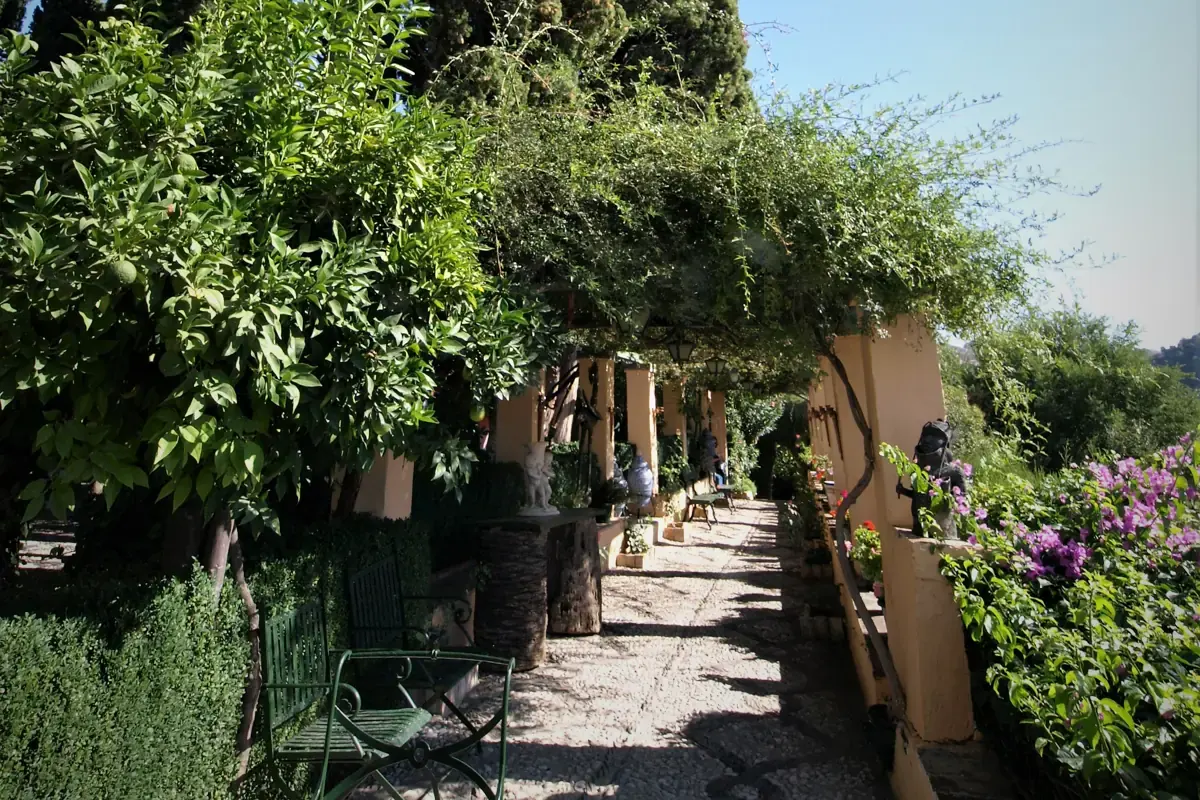
Wikipedia notes that at least twenty underground cisterns still exist in the Albaicín, and it names the Aljibe del Rey as the largest medieval cistern in the quarter, dating from the 11th century. Water shaped the hill, and the quarter's gardens grew from it. A carmen is a freestanding house with a small orchard or garden, and the word comes from the Arabic for a vineyard. The venue describes its own house as a carmen with a patio, a fountain and a garden.
Squares and viewpoints
The Albaicín's squares gather the neighbourhood. Wikipedia mentions Plaza Larga, once called El Ensanche and set beside the Bab al-Ziyada gate. For views, it names the Mirador de San Nicolás, a famous lookout across to the Alhambra, and the Mirador de San Cristóbal, which looks toward the southern Albaicín with the Alhambra beyond. Use the viewpoints as landmarks, and give yourself time to see one before you sit down to dinner.
What this means for your evening
None of this history is needed to enjoy the show, but it changes how the walk feels. You climb a hill that held a Zirid citadel, follow lanes that kept their Nasrid plan, and arrive on a street that was once the quarter's market. The venue's house, with its patio and garden, belongs to the older pattern of the quarter. Allow a little time to look around before dinner, because the setting is half of what this evening offers.
Frequently asked questions
Is the Albaicín a World Heritage Site?
Wikipedia says it was declared a World Heritage Site in 1994, as an extension of the Alhambra's heritage site.
Why is Calle Panaderos significant?
Wikipedia says Panaderos Street was the Albaicín's commercial centre in the Nasrid period. Jardines de Zoraya is on it.
Where do I get the Alhambra view?
The Mirador de San Nicolás is the best-known lookout, and the Mirador de San Cristóbal is another.
Sources